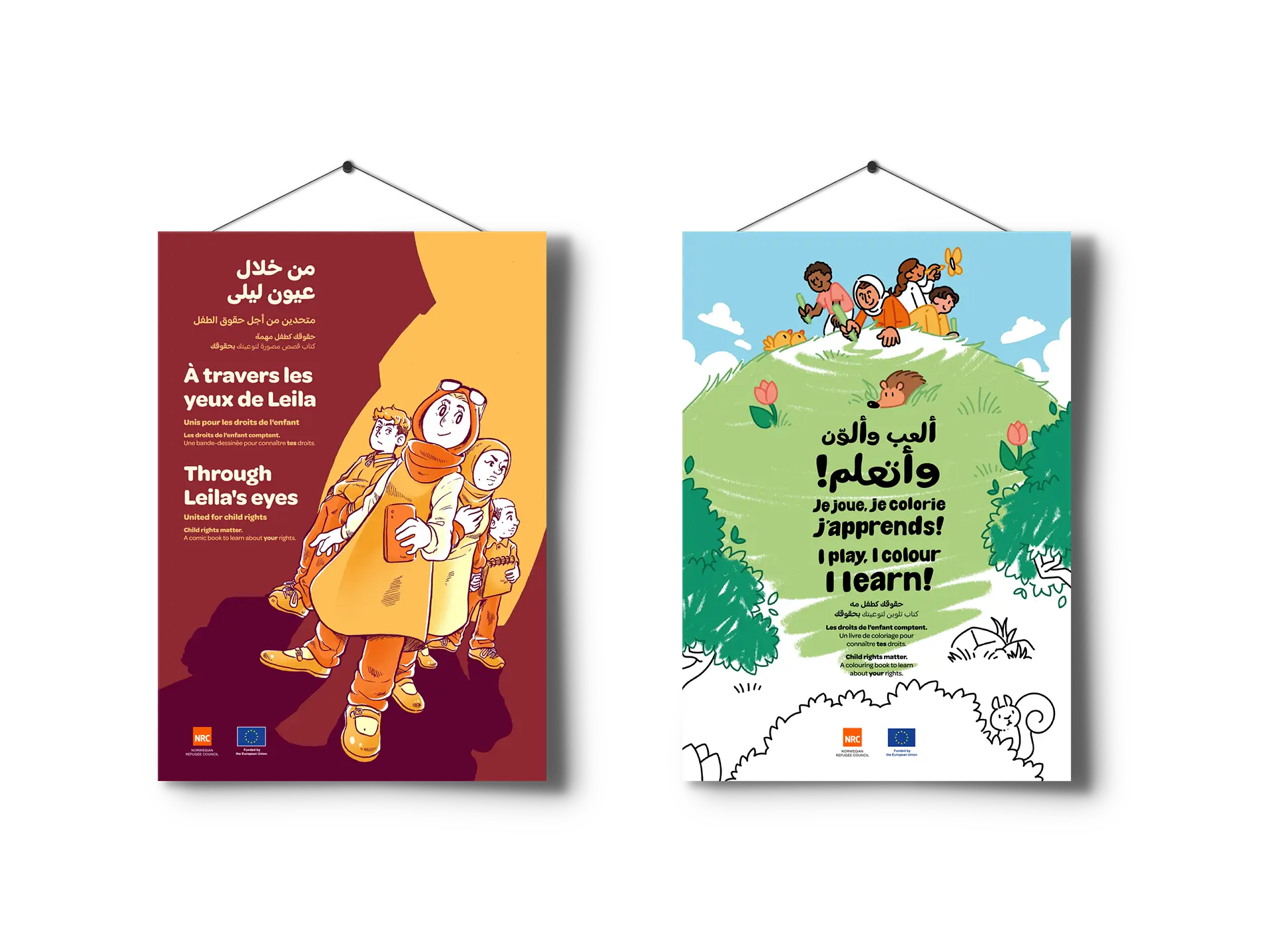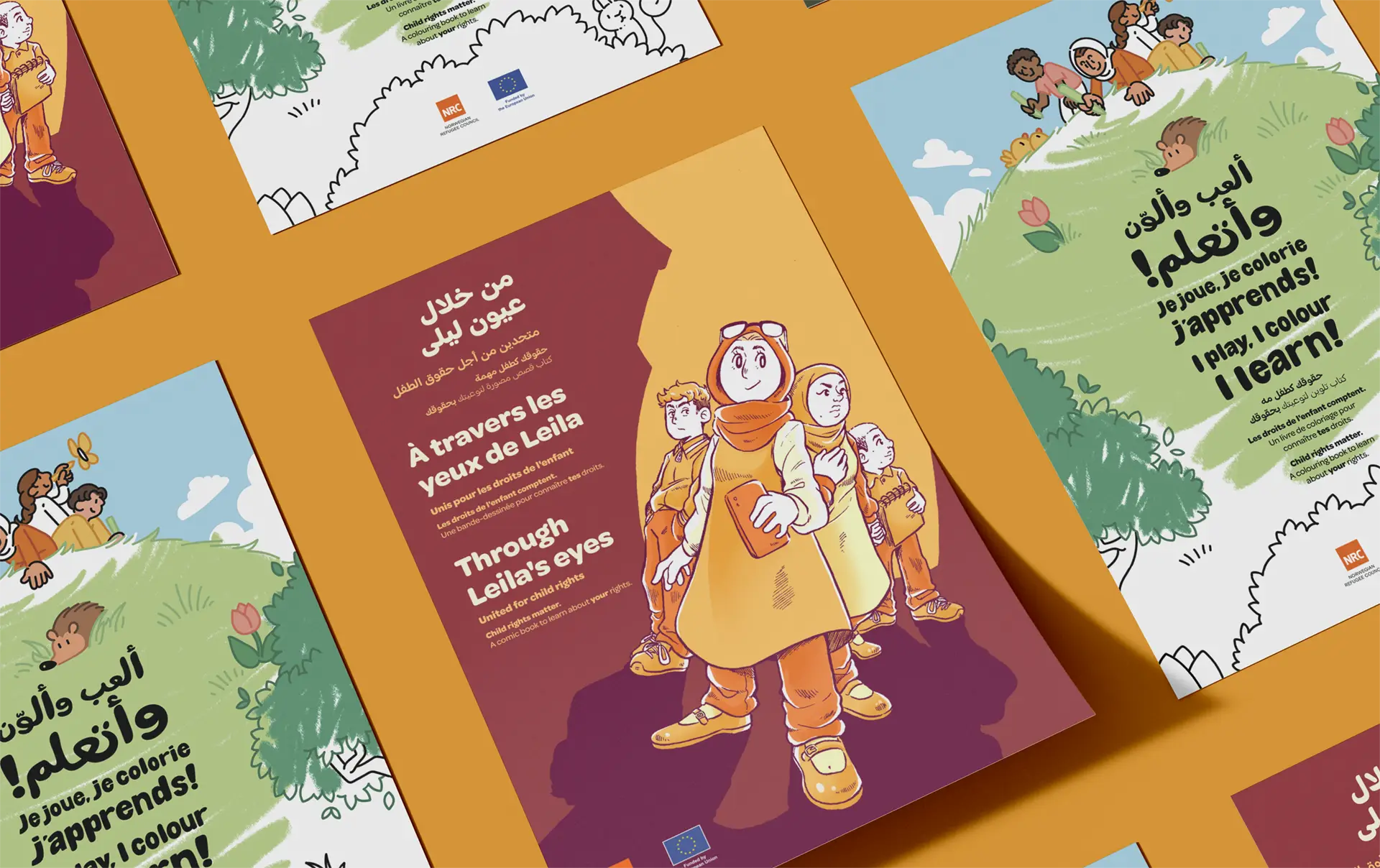
Knowing about their rights can help children recognise how they should be treated and when to ask for support. Children’s rights education can build this awareness from an early age. It can help children understand their rights to education, healthcare, safety, equality, play and participation.
In Libya, the Norwegian Refugee Council (NRC) wanted to help children and adolescents learn about their rights in ways they could understand. The challenge was to turn a broad and complex rights framework into engaging educational materials for different age groups.
Making children’s rights relevant to everyday life
The project started with a detailed framework based on the UN Convention on the Rights of the Child and relevant Libyan legislation. It covered education, health, protection, equality, privacy, participation, play and other areas of children’s lives.
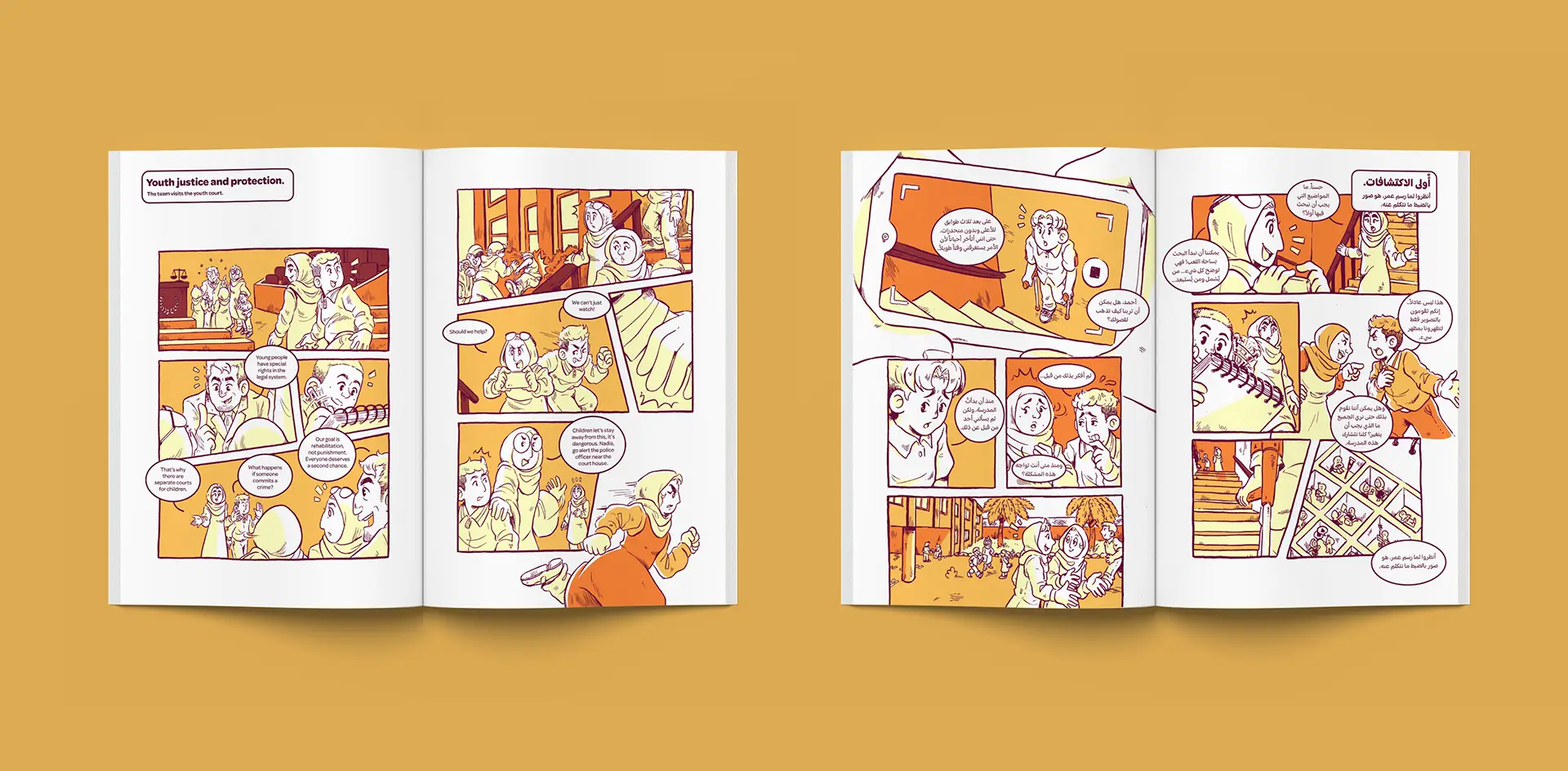
Rewire worked with NRC to turn this material into age-appropriate stories, messages and illustrations. We connected rights with situations children could recognise. Going to school introduced the right to education. Conversations with adults explored children’s right to be heard. Other scenes addressed healthcare, discrimination, safety, play and asking a trusted adult for help.
This approach made complex concepts more concrete. It also helped connect children’s rights with experiences at home, at school and in the wider community.
Children’s rights education for different ages
Children understand and engage with information differently as they grow. We developed two publications to respond to these different needs.
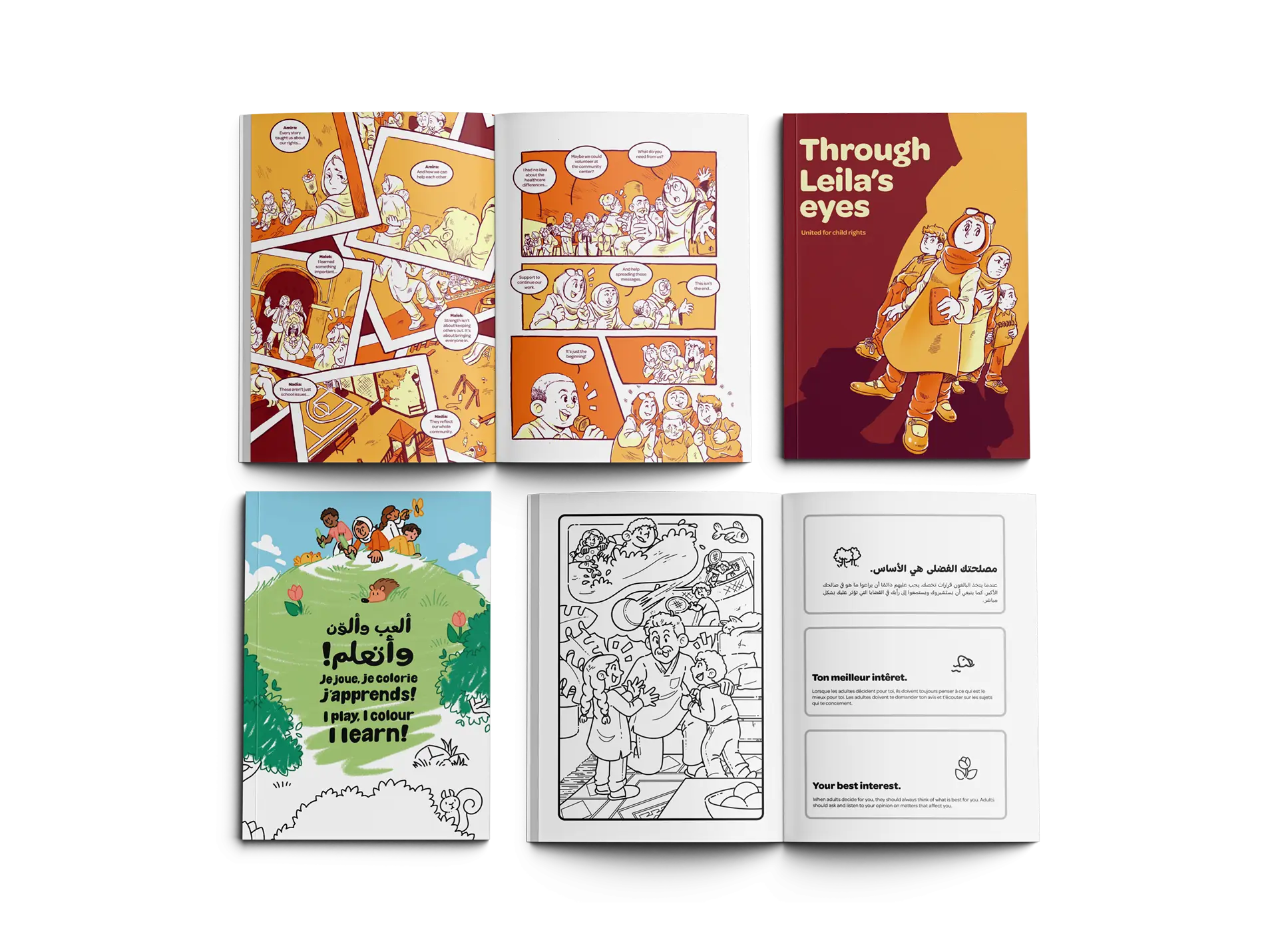
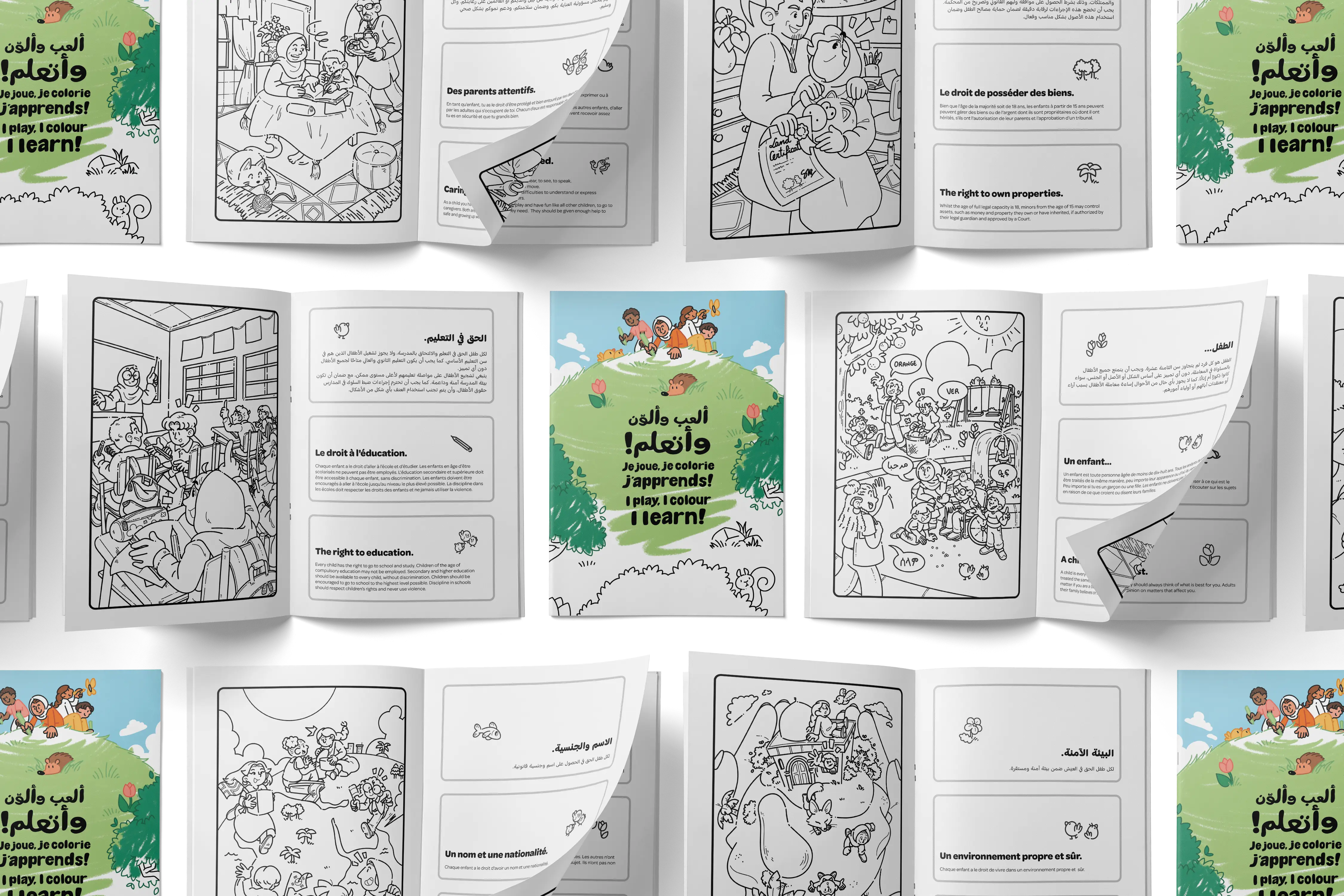
For children aged 6 to 10, we created a colouring book. Simple messages and illustrations introduce key rights through familiar situations. Colouring and visual exploration give younger children an accessible way to engage with the ideas.
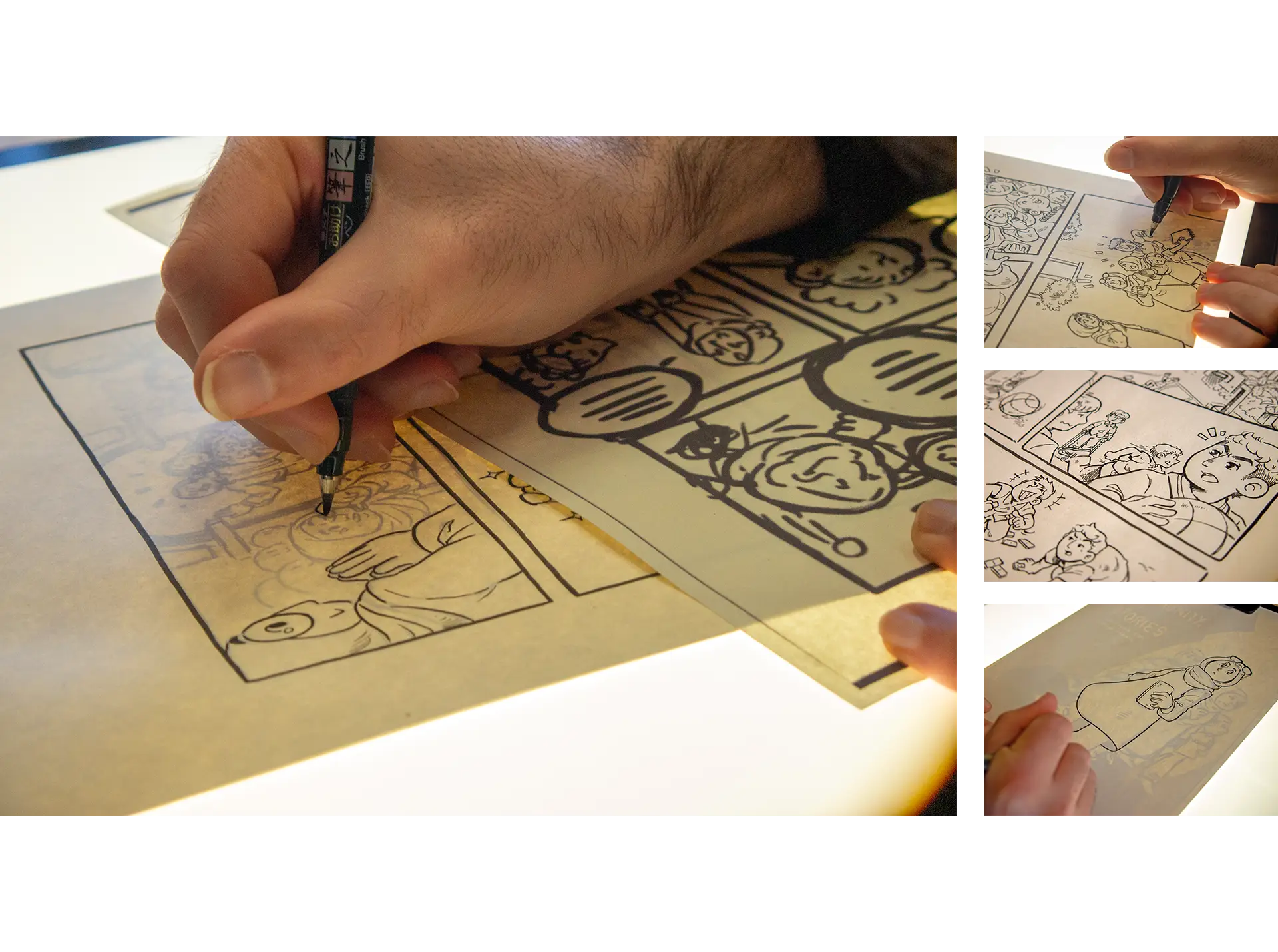
For young people aged 11 to 18, we developed a comic book. Stories and characters explore rights through situations that adolescents may encounter. The format encourages readers to consider what those rights mean in practice.
Illustration also supports learning across both publications. The images represent children from different backgrounds and with different abilities. They help reinforce ideas around inclusion, protection, equality and participation.
Building awareness through storytelling
Rewire developed the scripts, copy, narrative structure and visual design for both publications. Working across content and design helped us preserve the meaning of the underlying rights while making them easier for children to understand.
The colouring book and comic book give NRC two practical tools for raising awareness of children’s rights in Libya. By connecting rights with recognisable situations, they can help children understand what those rights mean in their own lives. They can also encourage conversations with families and communities about safety, equality, dignity and participation.
***