A legal right that cannot be reached is not a right. It is a promise broken at the point of need. Across Benin, Burkina Faso, Côte d’Ivoire, Togo, and Cameroon, the law allows safe abortion. Yet stigma, bureaucratic obstruction, inaccessible services and information gaps stand in the way. Millions of women and girls never reach the care they are legally entitled to. The distance between what the law allows and what women can actually access is not an accident. It is the product of gender inequality and systemic neglect. Patriarchal social norms fill every space the law leaves unguarded.
A safe abortion advocacy campaign rooted in evidence
Rutgers International, a global leader in sexual and reproductive health and rights, commissioned the first systematic comparative study in the region. The study examined how legal frameworks, administrative systems and social norms interact to shape, and obstruct, women’s access to safe abortion.
Young, in-country researchers led the work across five countries. Their contextual knowledge kept the voices of those most affected at the centre of the evidence. The findings were too urgent to remain inside a report.
The Maze Women Face: creative concept and campaign identity
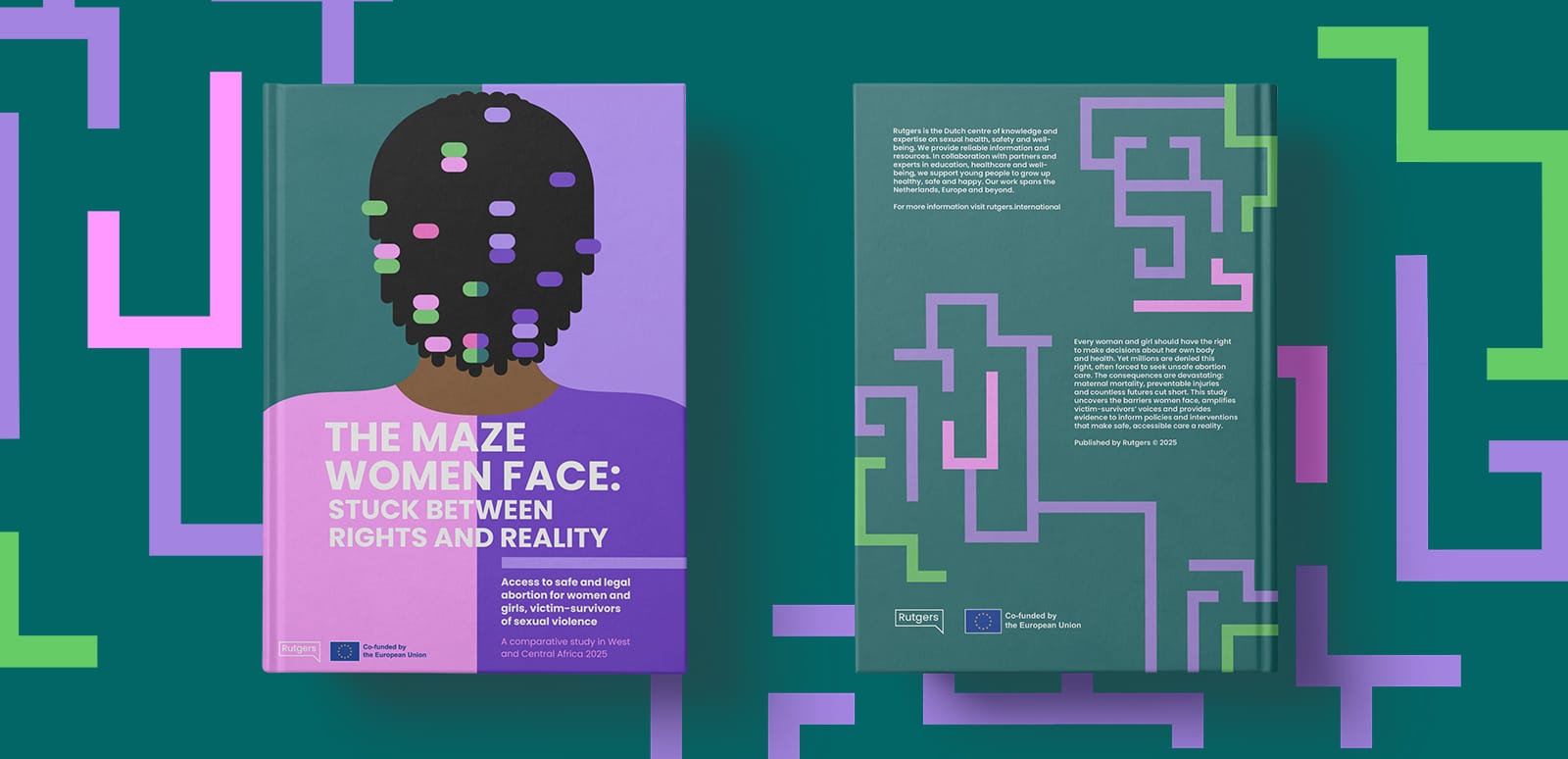
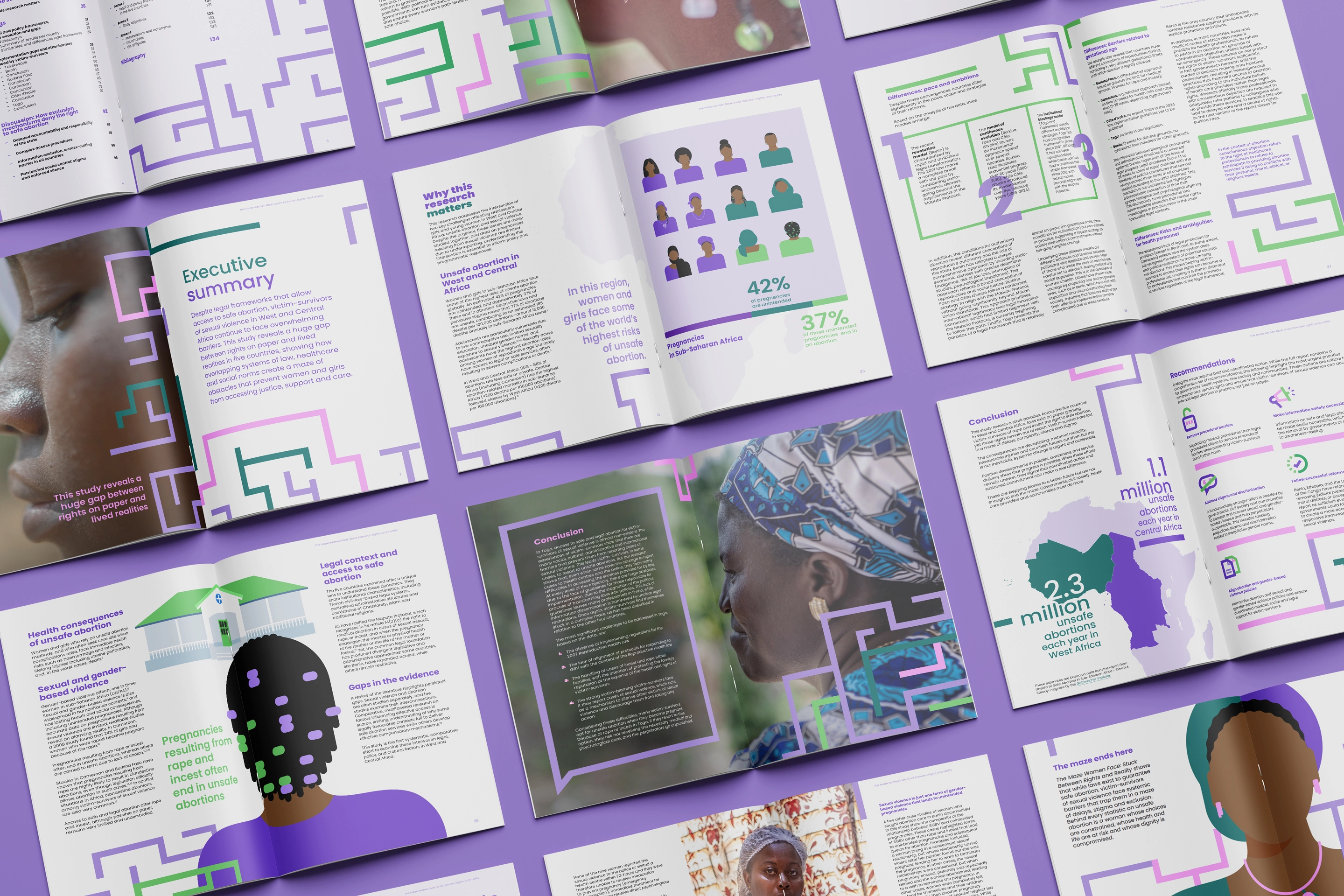
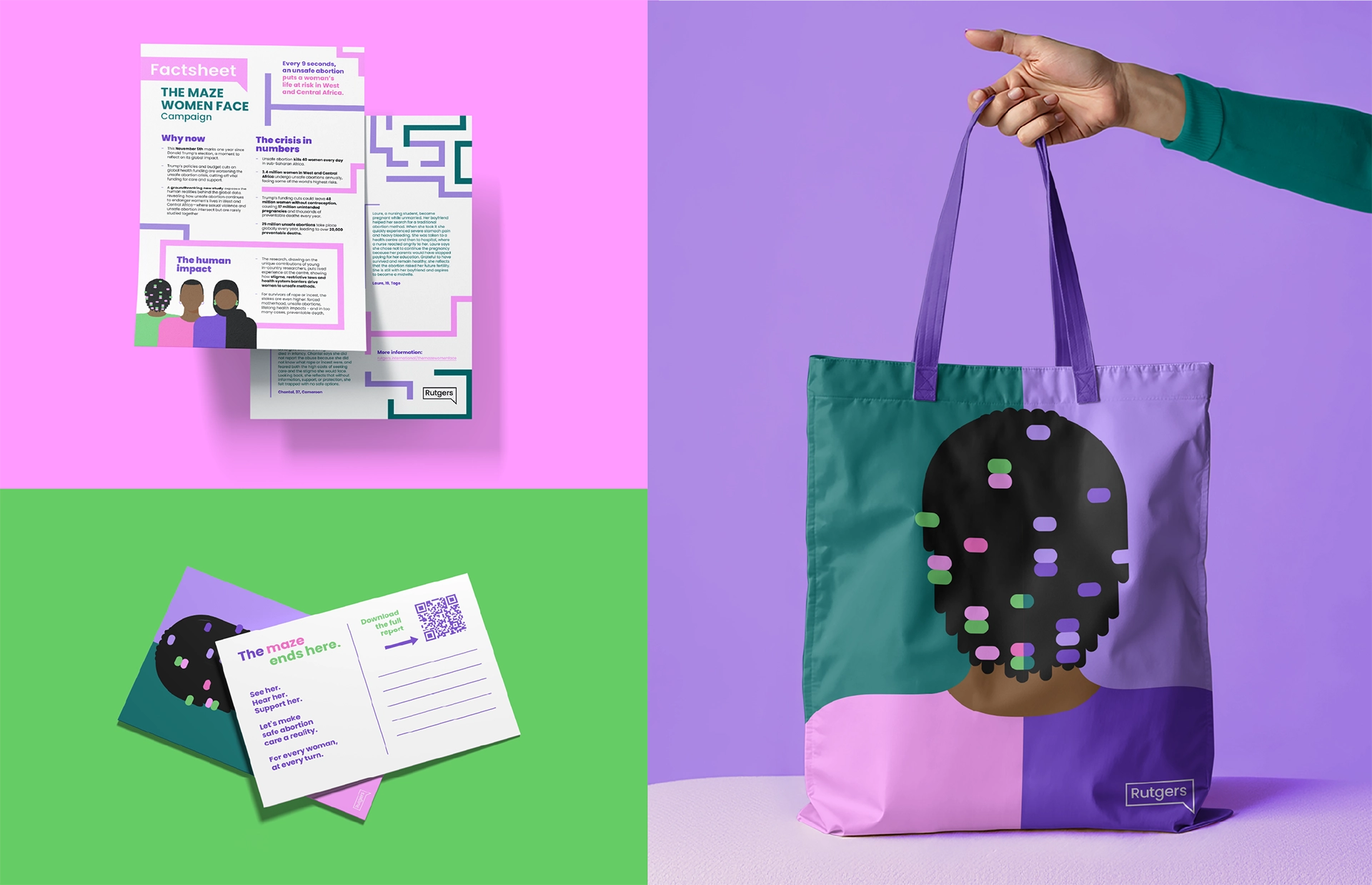
We partnered with Rutgers to transform that research into The Maze Women Face: Stuck Between Rights and Reality. The campaign anchors itself in a single, precise metaphor: the maze.
The maze is not decorative. It is structural: a visual and narrative system that maps the overlapping obstacles women encounter. Legal, bureaucratic, social and medical barriers appear side by side, without reducing their experience to abstraction. The creative approach holds two things in tension simultaneously: the systemic nature of the violations and the individual dignity of every woman navigating them.
The scale of preventable death
Every year, around 25 million unsafe abortions occur worldwide, according to the WHO. Over 20,000 of them prove fatal. In West Africa alone, an estimated 2.3 million unsafe abortions occurred in a single year. Central Africa saw 1.1 million more. These are not statistics about risk. They are statistics about preventable death. Research consistently links these deaths to gender inequality, stigma and the failures of systems meant to protect women’s rights.