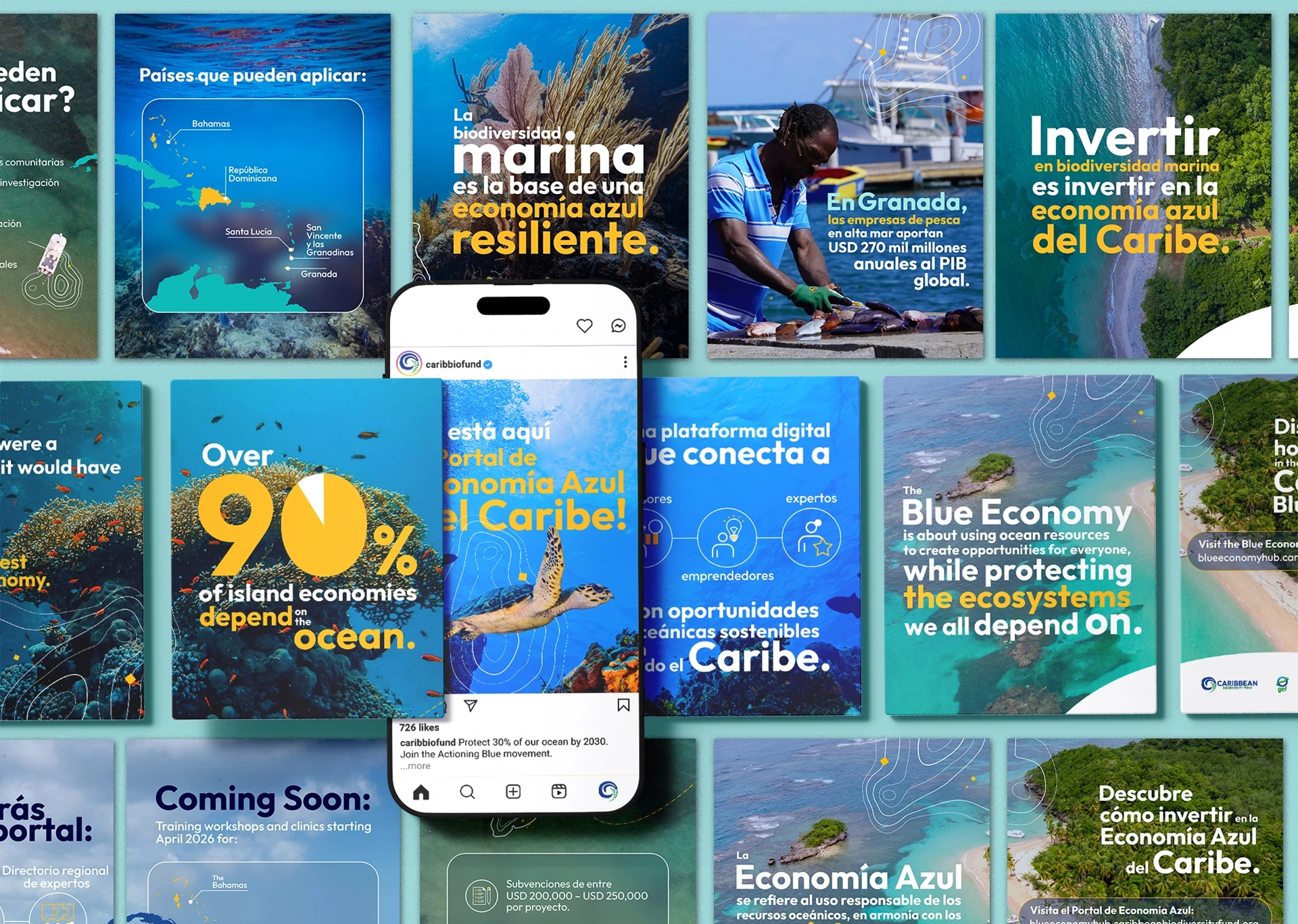
The ocean underpins much of the Caribbean’s economy. Coral reefs, mangroves and seagrass beds support fisheries and tourism, and protect coastlines from storms. Despite this, marine and coastal ecosystems remain chronically underfunded. Private investment rarely reaches the conservation work that keeps these systems healthy.
Closing that gap needs finance mechanisms that connect everyday economic activity, banking, tourism, carbon markets, to conservation outcomes on the ground. Without a way to route money from ordinary transactions to marine protection, blue economy strategies risk going unfunded.
The Caribbean Biodiversity Fund’s approach
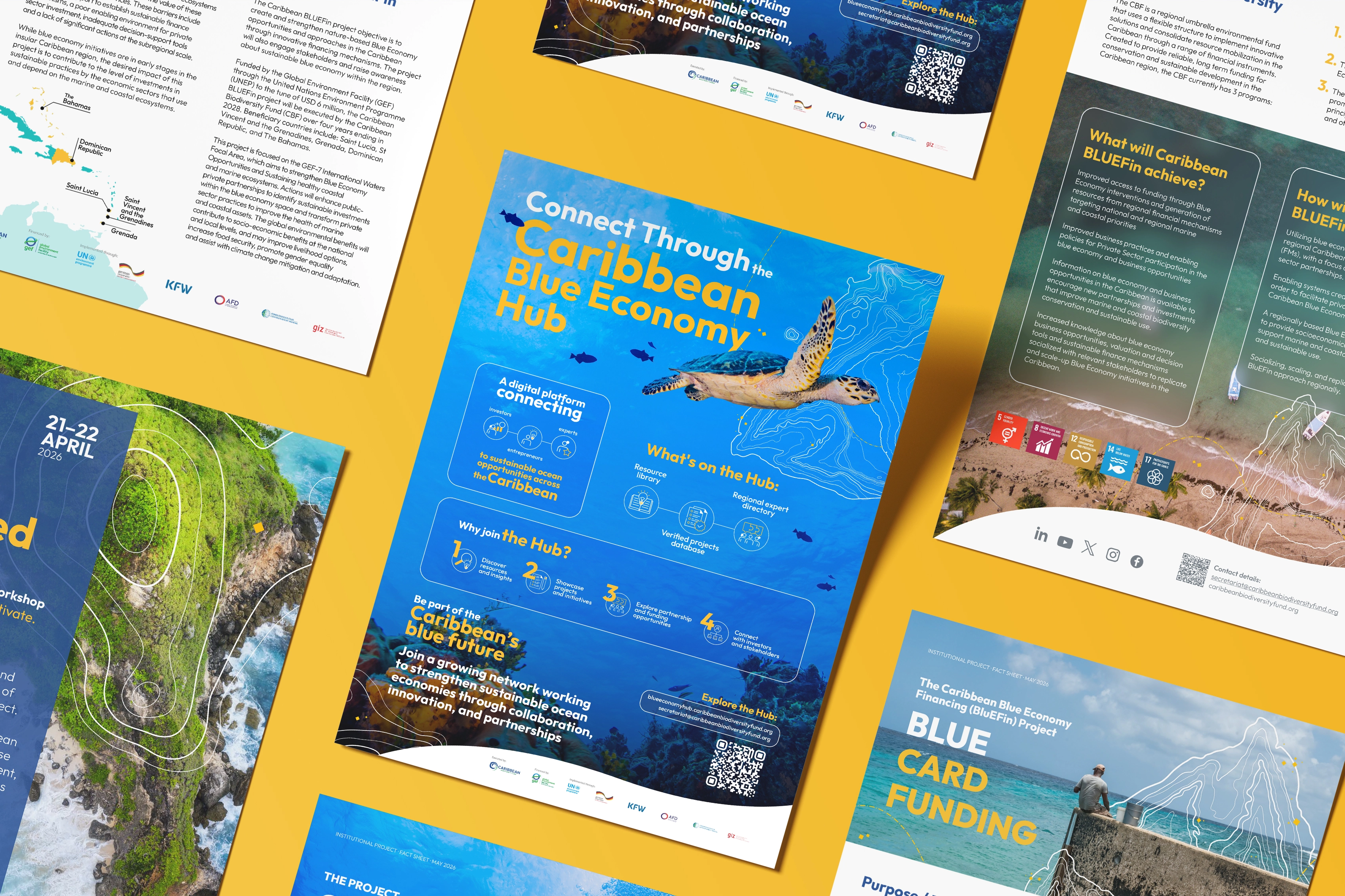
The Caribbean Biodiversity Fund addresses this gap through its Caribbean Blue Economy Financing project, known as BluEFin. Through the Caribbean Blue Economy Hub, the project unites innovators, investors and communities to protect the region’s oceans while building resilient, ocean based economies. It works to unlock private sector investment in marine and coastal conservation. Its reach spans Saint Lucia, St Vincent and the Grenadines, Grenada, the Dominican Republic and The Bahamas.
BluEFin’s work rests on four pillars: empowering entrepreneurs, funding conservation, connecting stakeholders across islands, and building capacity and financial literacy.
To put these pillars into practice, the project has designed three finance mechanisms. The Blue Card channels a share of everyday card transactions into conservation projects. The Blue Carbon Facility funds projects that restore mangroves, seagrass beds and salt marshes. The Digital Payment System collects fees from Marine Protected Areas electronically, improving transparency and compliance.
Rewire supports the Caribbean Biodiversity Fund to communicate BluEFin’s work to a wide range of audiences. Through ongoing communication support, we help turn a technical funding model into a shared regional effort to protect the Caribbean’s oceans.
***