Coral reefs protect Caribbean coastlines from storm surge and support the fisheries and tourism economies that coastal communities depend on. But when hurricanes damage reefs, the window to act is short. Broken coral can often be stabilised and restored, but only if funding and trained response teams are available within days.
The Caribbean Biodiversity Fund (CBF) leads a new parametric insurance mechanism to address that gap. WTW provided the technical design, drawing on lessons from the Mesoamerican Reef Fund’s own reef insurance work. Unlike traditional insurance, which requires a damage assessment before releasing funds, the mechanism triggers payouts based on wind speed and storm proximity. Funds can reach national conservation trust funds within days, allowing trained reef responders to begin work before damaged coral is lost.
The communications challenge was to introduce a complex new mechanism to very different audiences. It also had to build confidence in what would happen when a hurricane hits. Coastal communities needed to understand what the programme means for them. Governments and disaster managers needed to see reef response as part of national risk planning. Journalists needed enough information to report on the mechanism accurately. Donors, insurers and businesses needed to understand its wider value.
Building the communications approach
Rewire developed the communications strategy for the programme, starting with interviews with key stakeholders. These conversations helped us understand their different perspectives, priorities and information needs. They included national decision makers and conservation organisations who would take part in reef response on the ground.
We used these insights to define the communications objectives, audiences and key messages. A central focus was making the mechanism easy to understand without losing the technical detail needed by specialised audiences. We also connected reef protection with community livelihoods and national resilience.
Making a complex financing mechanism accessible
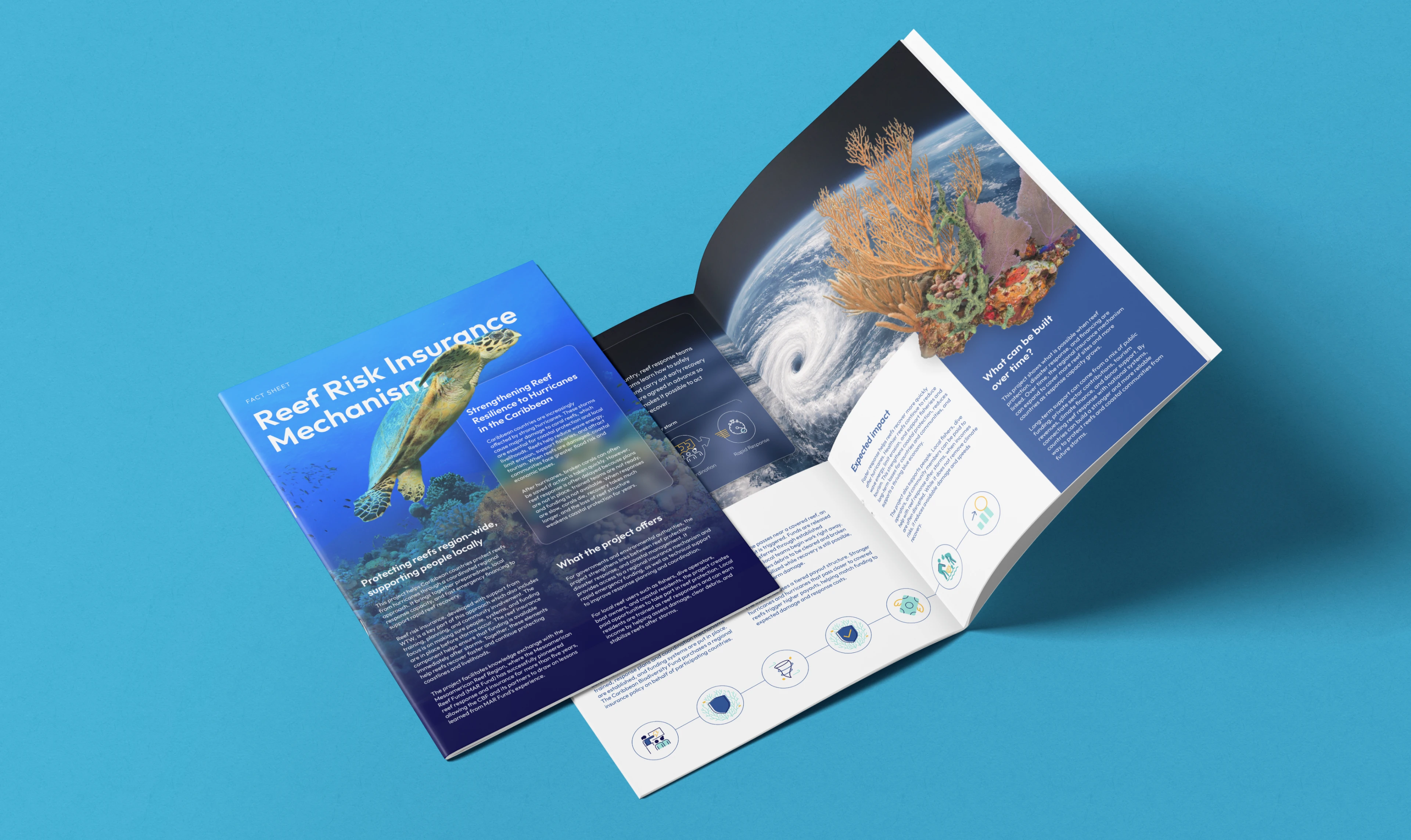
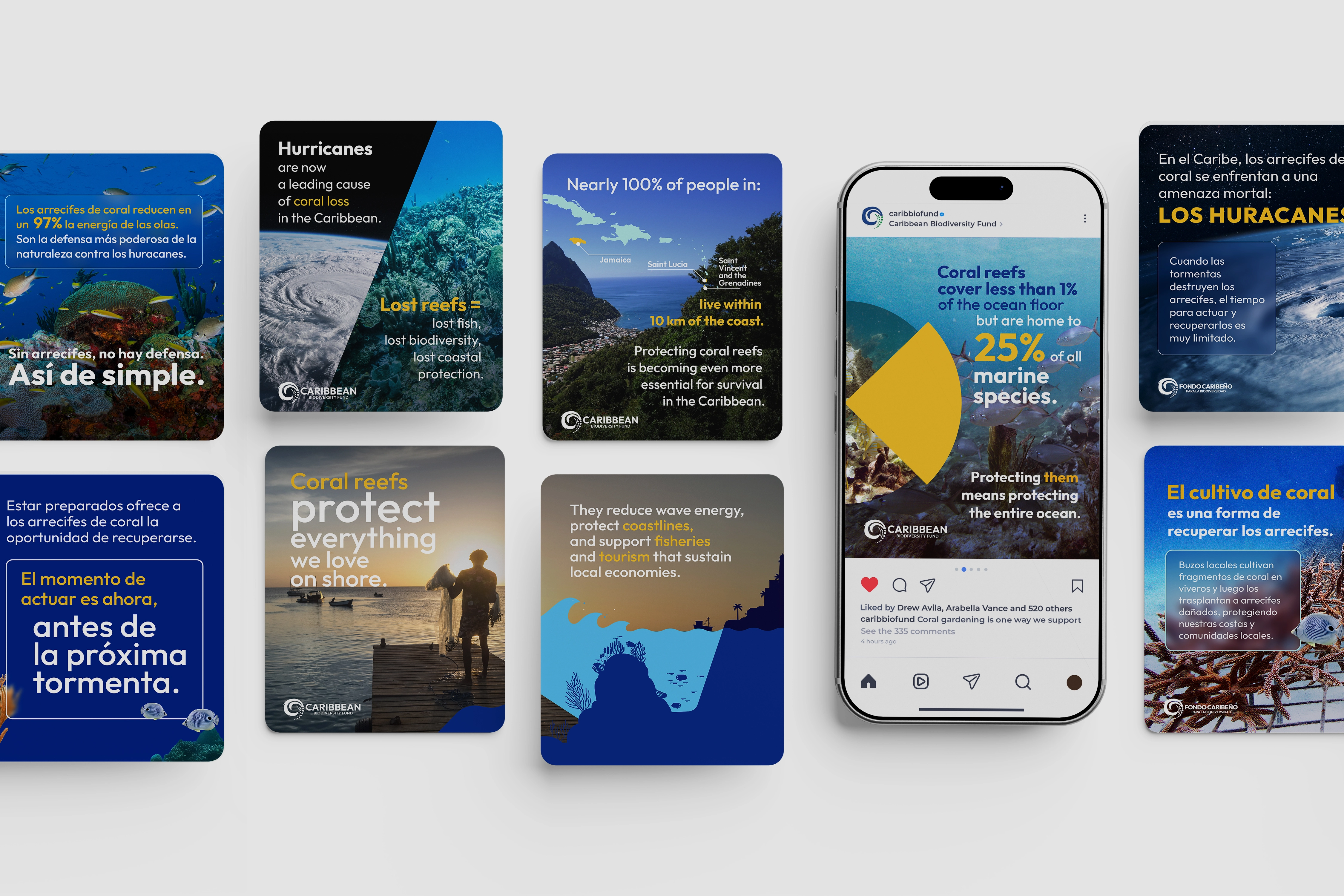
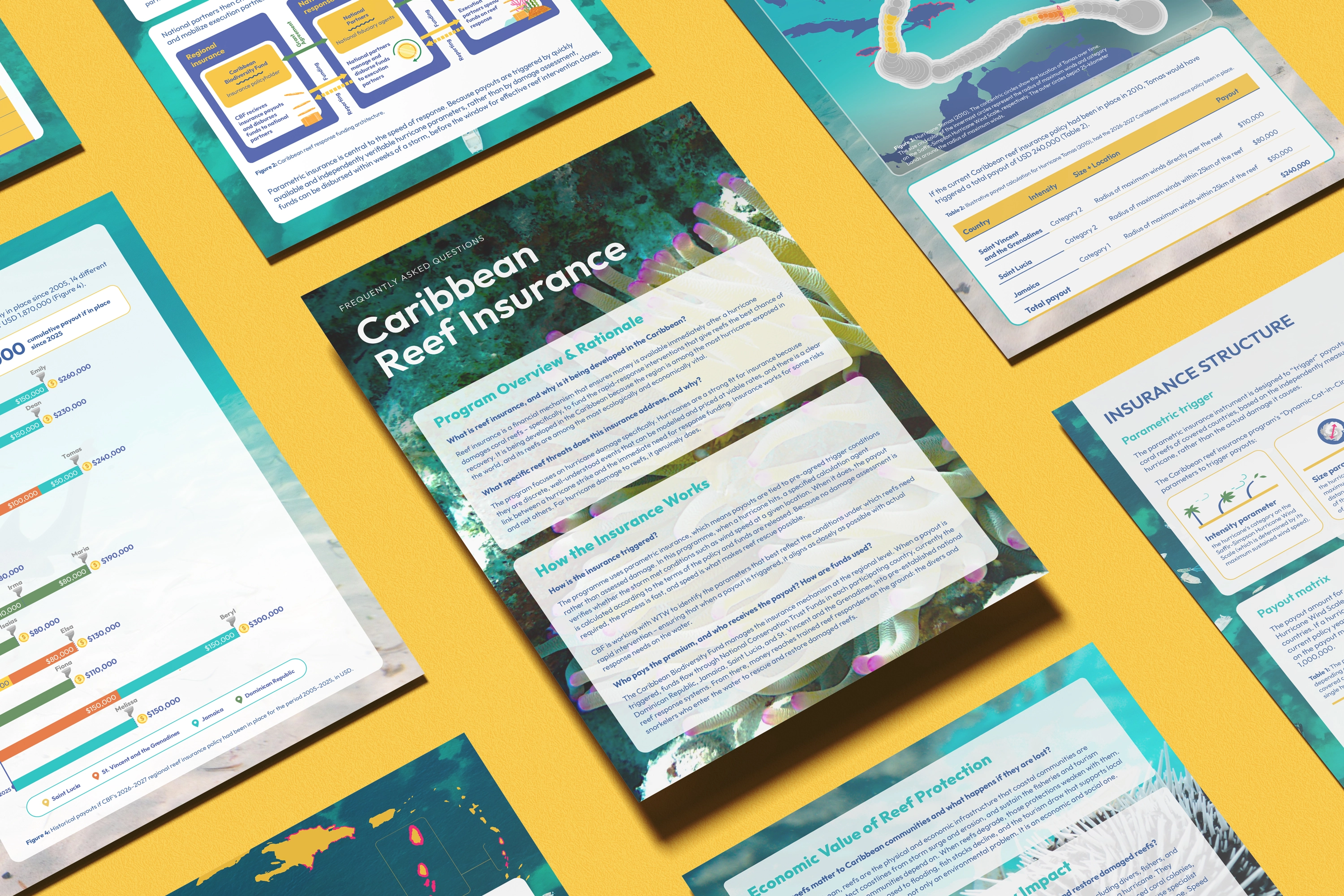
We then translated the communications approach into a bilingual suite of knowledge products in English and Spanish. The package includes factsheets, journalist FAQs, policy briefs, infographics, case studies and presentations.
Each product serves a specific audience and purpose. Together, they turn technical information about parametric insurance, payout triggers and reef response into clear, accessible communications. A government official can understand how the mechanism fits into national risk planning. A journalist can explain how payouts work. A coastal community can see what happens after a hurricane.
The result is a coherent set of communications materials supporting the rollout of the Caribbean’s first reef risk insurance mechanism across four pilot countries. The materials help governments, donors, insurers, journalists and coastal communities understand how the mechanism works, why rapid reef response matters and what happens when a payout is triggered.
***